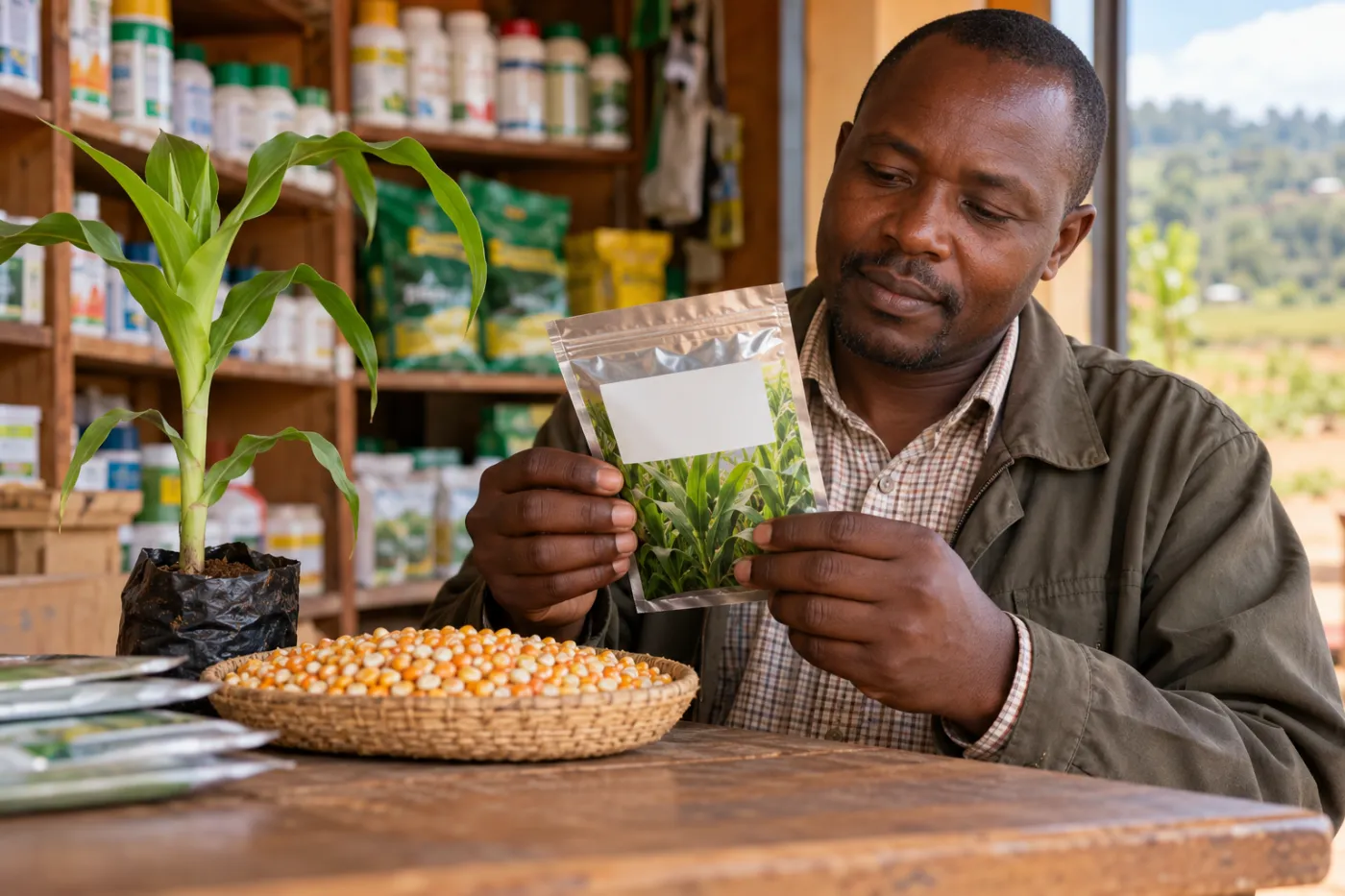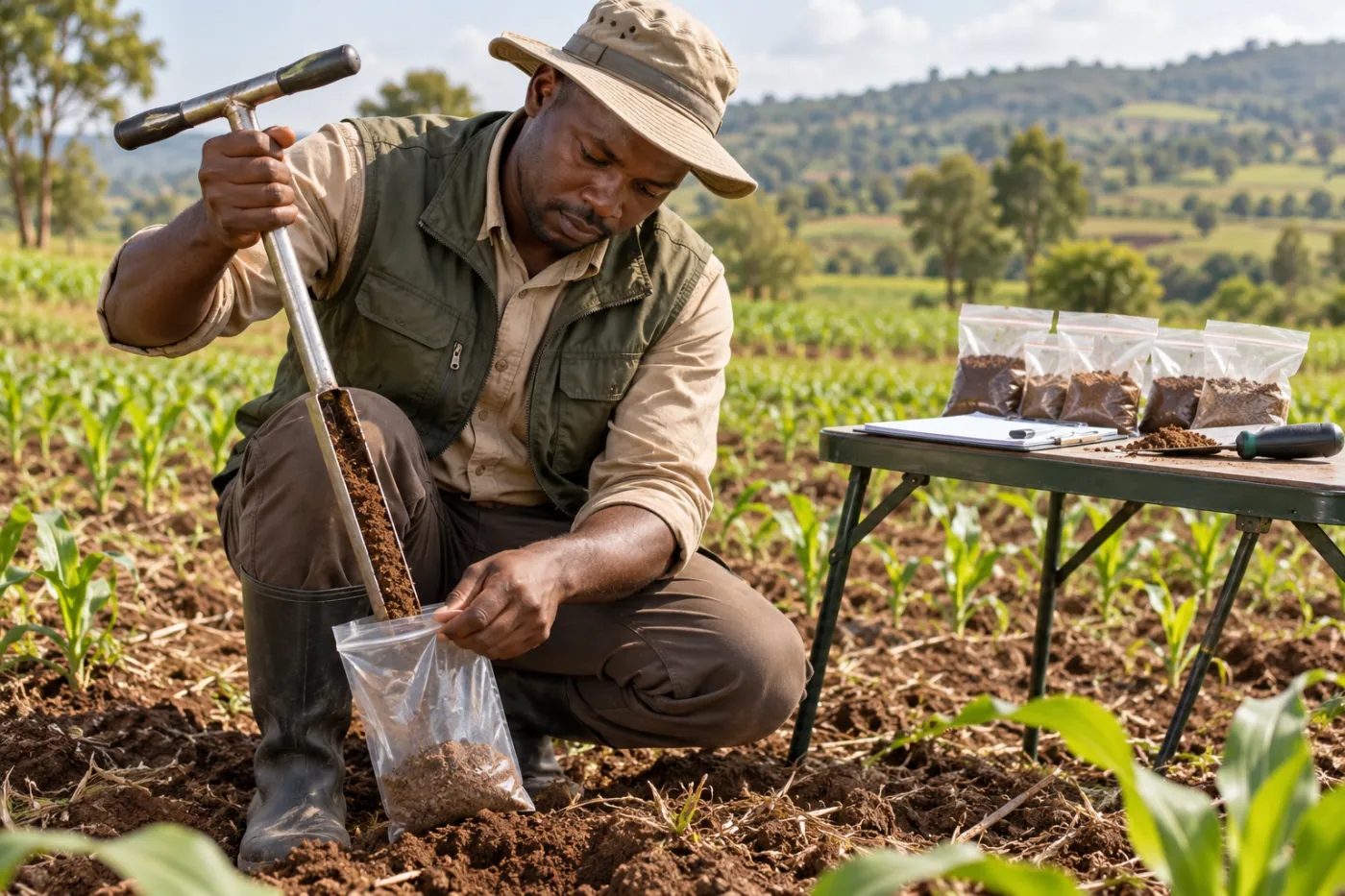
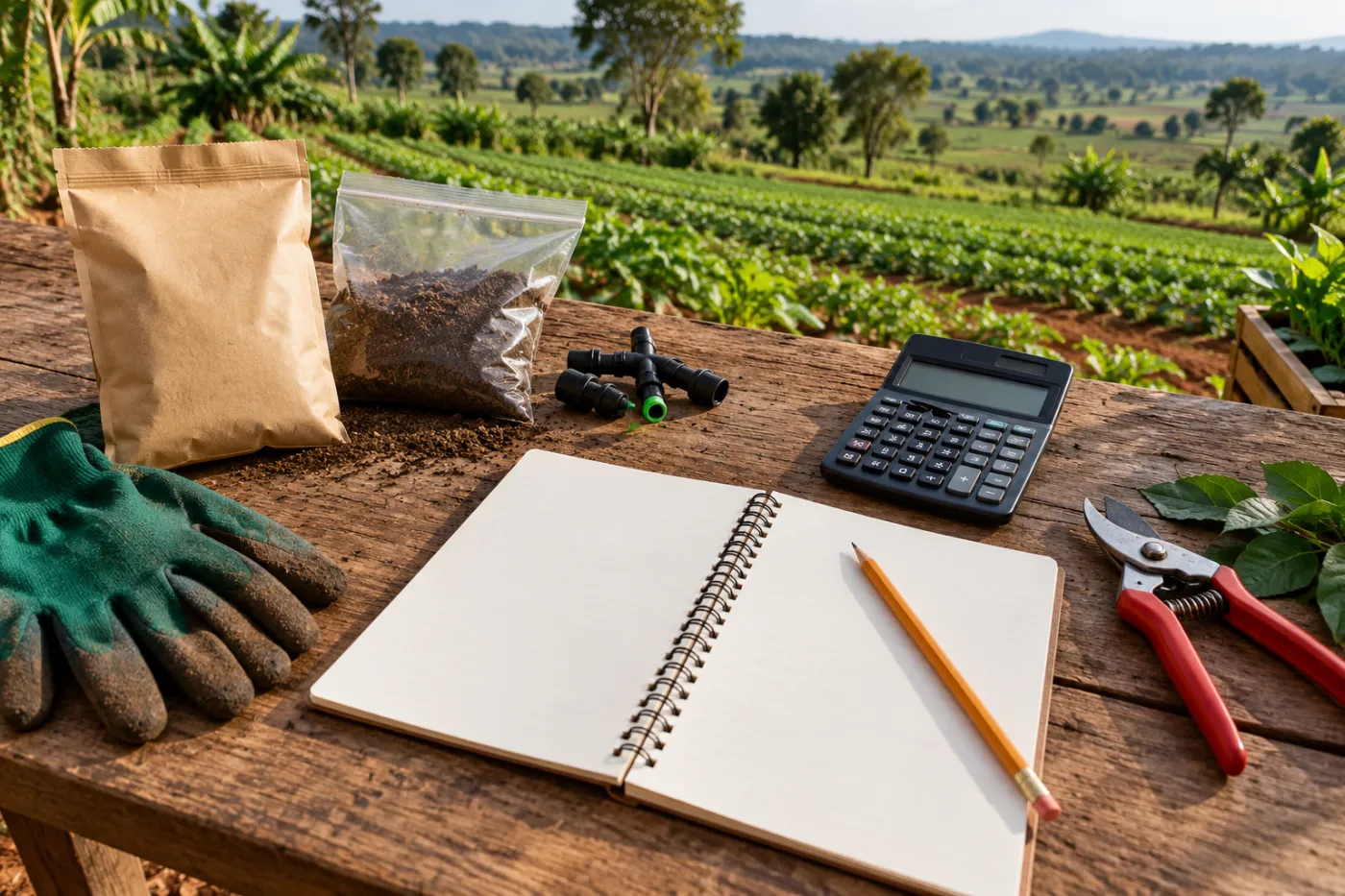
A seasonal shopping list helps turn farm plans into specific purchases. Start with the activities you intend to carry out, then work backwards to identify the inputs and equipment required.
Review what you already have
Check tools, irrigation fittings, protective gear and stored inputs. Record quantities, condition and expiry information where applicable. Separate usable stock from damaged, unidentified or expired items.
Link purchases to actual activities
For crop enterprises, list land preparation, planting, crop monitoring and harvest needs. For livestock enterprises, include feed planning, housing maintenance and veterinary services. Use local extension advice and current local conditions when deciding timing.
Compare complete costs
Request quotes that show pack sizes, delivery charges and required accessories. A cheaper item may not meet the required specification. Avoid buying unfamiliar chemicals or medicines merely because they are discounted.
Keep a simple record of what was bought, why it was needed and how it performed. Review the list after the season. This creates a farm-specific purchasing history and makes future conversations with your agrovet or adviser more useful.