For a dairy farmer, feed planning should cover more than the next delivery of concentrates. A written reserve plan helps organise forage production, purchases and storage before supplies become difficult to obtain.
Count what is available
List your animals, current feed stocks and expected forage harvests. Note the condition of stored material and identify gaps early. A livestock nutrition adviser can help estimate requirements for the animals you keep.
Choose a suitable conservation method
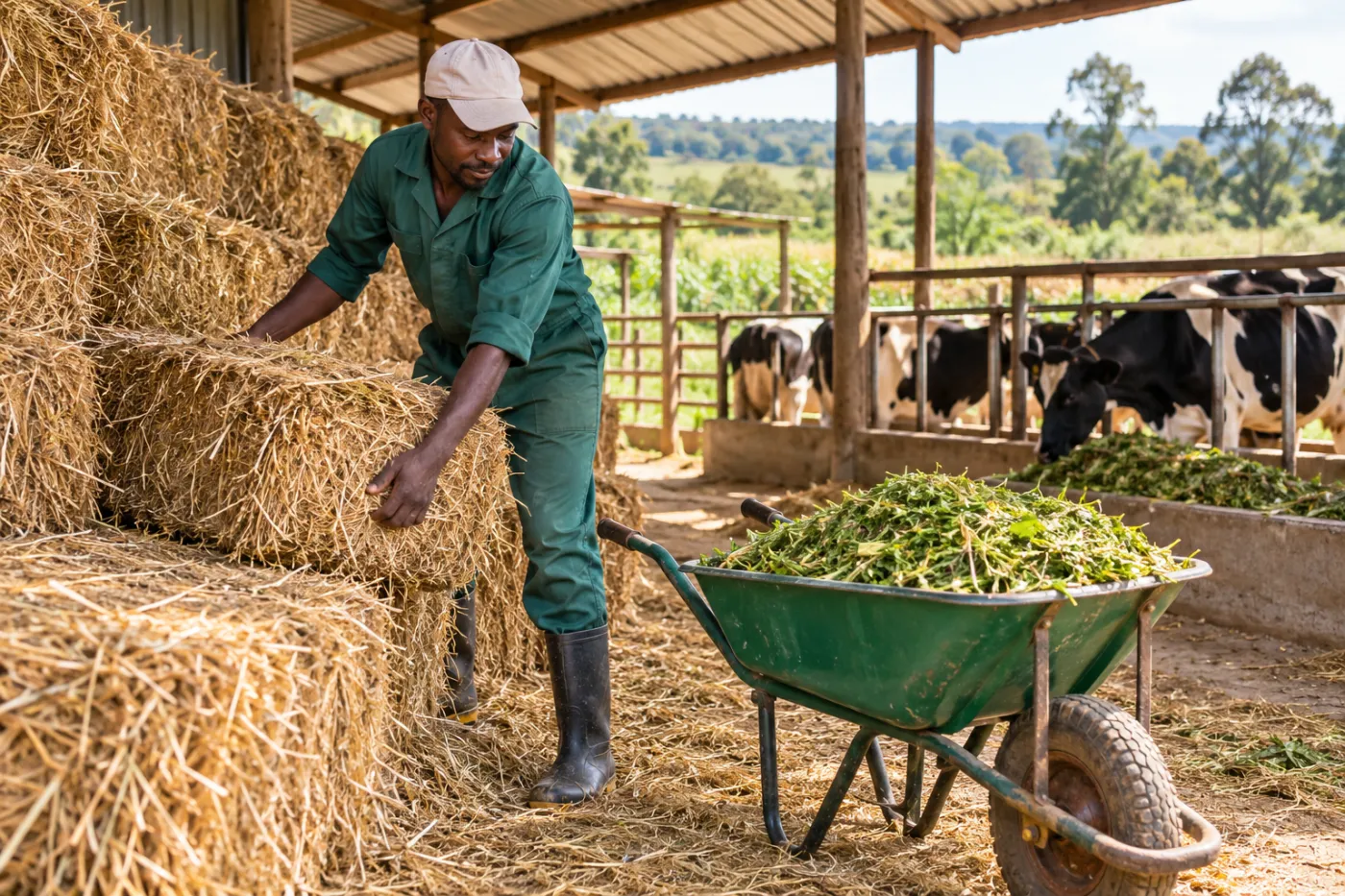
KALRO dairy training materials cover hay and silage as forage conservation options. The appropriate method depends on the crop, available equipment, labour and storage conditions. Arrange practical training before attempting an unfamiliar process.
Protect the reserve
Prepare storage before harvesting or buying forage. Inspect stored feed regularly and ask for advice when material is visibly spoiled or its quality is uncertain. Do not assume that purchased forage is suitable simply because it is available.
Keep records of quantities stored, quantities used and wastage. Review these records after the dry period to improve the next season plan.
Further reading: KALRO dairy value chain training materials.